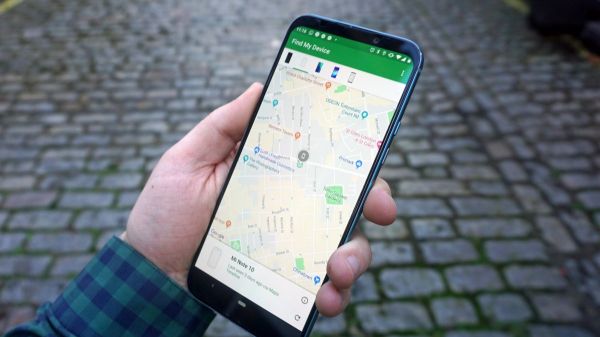
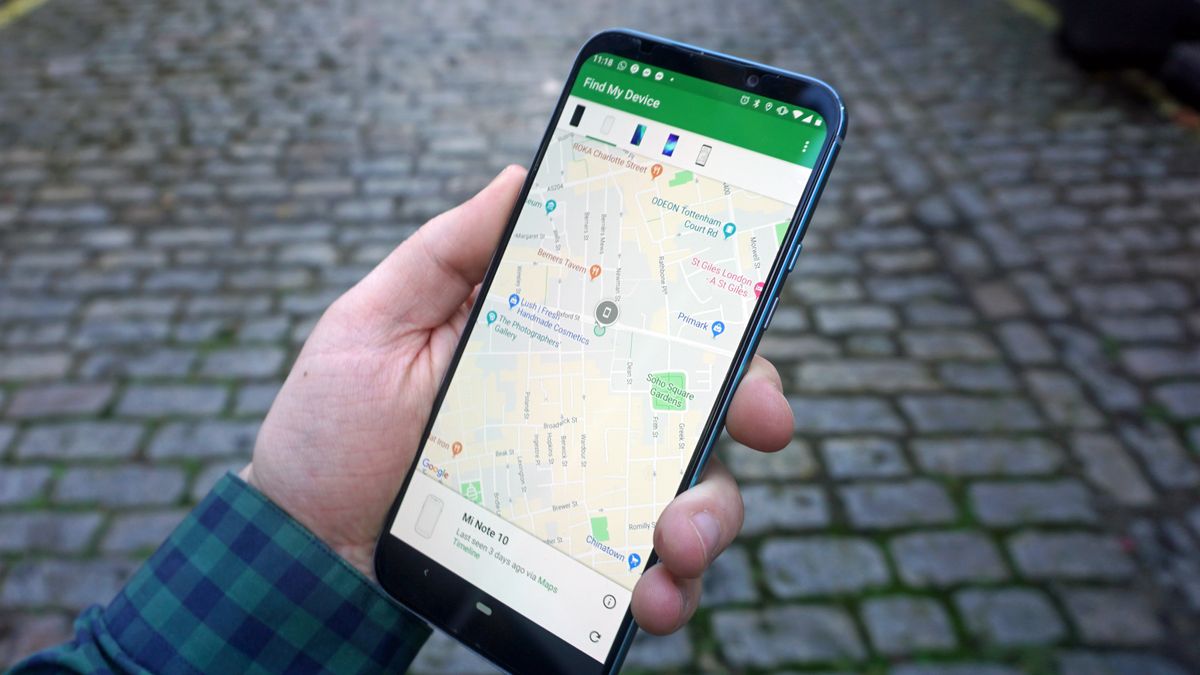
Google’s Find My Device on a Black Shark 2 Pro (Image credit: Future)

Here’s how

Google’s Find My Device on a Black Shark 2 Pro (Image credit: Future)

When I was walking down the bustling metropolitan battlefield of London’s Oxford Street after work one day, texting away on the Xiaomi Mi Note 10 I was meant to be testing, I watched as a passing cyclist grabbed the phone from my hand and sped off into the night.

By the time my brain twigged I’d been robbed, the bike bandit was much further down the road, and any hope of pursuit was gone. My handset had been pinched in broad daylight – or, at least, the never-ending light of London’s busiest street – and there was nothing I could do about it.

The story doesn’t end there, though. I’d reordered a SIM card, hoping everything on my lost phone was backed up, and resigned myself to finding a new handset – but thanks to a pinch of luck, some kind humans, and Google’s Find My Device app, the phone was back in my hands in two short days. Here’s how.

[the_ad id=”978″]

Initial attempts to reclaim my device

Some people’s first instinct after being robbed might be to contact the police – I was decidedly less optimistic, as I decided they’d have better things to do than chase a pedalling pilferer. (It’s also pretty hard to phone the cops when your phone has just been stolen.)

Instead, I retreated to the nearest Wetherspoon – a UK chain of pubs, and a common abode for lost or weary souls – that was, co-incidentally where I was meant to be meeting some friends anyway.

I was lucky enough to be carrying another test phone, the Black Shark 2 Pro, and while this didn’t have a SIM card so was pretty useless out and about, the free Wi-Fi available at the Wetherspoon pub gave it a lease of life. I could download apps to message the people I was to meet, although WhatsApp was still out of action – annoyingly, it’s tethered to a phone number, and the handset with that contact information was presumably half a world away at this point.
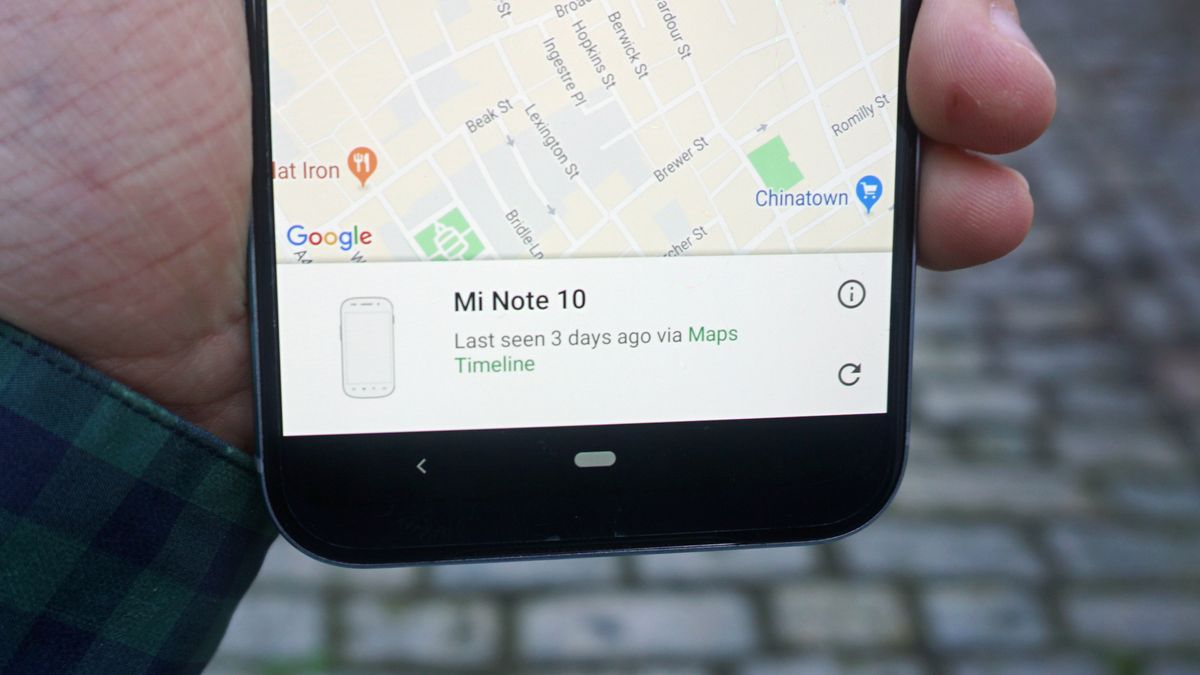
Where are you, Mi Note 10? (Image credit: Future)

I also downloaded a Google app I had used before – Find My Device. It lets you locate other devices signed into the same account as you, as well as set off an alarm on it, erase your information on the device, and leave a message for anyone who finds the device (useful if your handset is lost, not as much if it’s stolen, unless you want to leave pleading messages to the thief).

[the_ad id=”978″]

To my surprise, when I searched for the location of my missing Xiaomi phone, it was only 10 minutes walk from my position, roughly halfway between the point of the crime and my cosy pub. While the location circle was quite wide, I could clearly see it right by the Oxford Street Samsung Store, and it didn’t seem to be moving.

Could the cycling criminal have dumped the phone, realising the phone wasn’t available in the UK yet and was therefore potentially worthless? Or could he or she still be in the area, ready to snatch another smartphone from an unsuspecting victim’s hands? Since the location area was pretty wide, and the phone was potentially still with a criminal, I knew there wasn’t much chance I’d find it in the area. But I had to check.

Suffice to say, I couldn’t find the phone. I patrolled the street a few times, checked the outsides of shops to see if someone had picked it up and placed it on a nearby ledge. Nothing. Later I returned with a friend who called my phone, and I used Find My Device to set off the alarm, but we couldn’t hear or see it. The phone was lost.

A little backstory

This wasn’t the first time I had try to use Find My Device, and the previous time hadn’t been successful either. Some time prior I’d lost a handset in a foreign country, and despite the best efforts of Find My Device and a collection of colleagues calling it and helping me track it, the phone was never returned.

[the_ad id=”978″]

I therefore had the idea that perhaps Find My Device was more a consolation prize,  just to make you feel you were doing something to help, than an actual tool you could use to reclaim a phone. I was hesitant to download it to reclaim my Xiaomi Mi Note 10, but you always want to feel like you’re doing something to help.
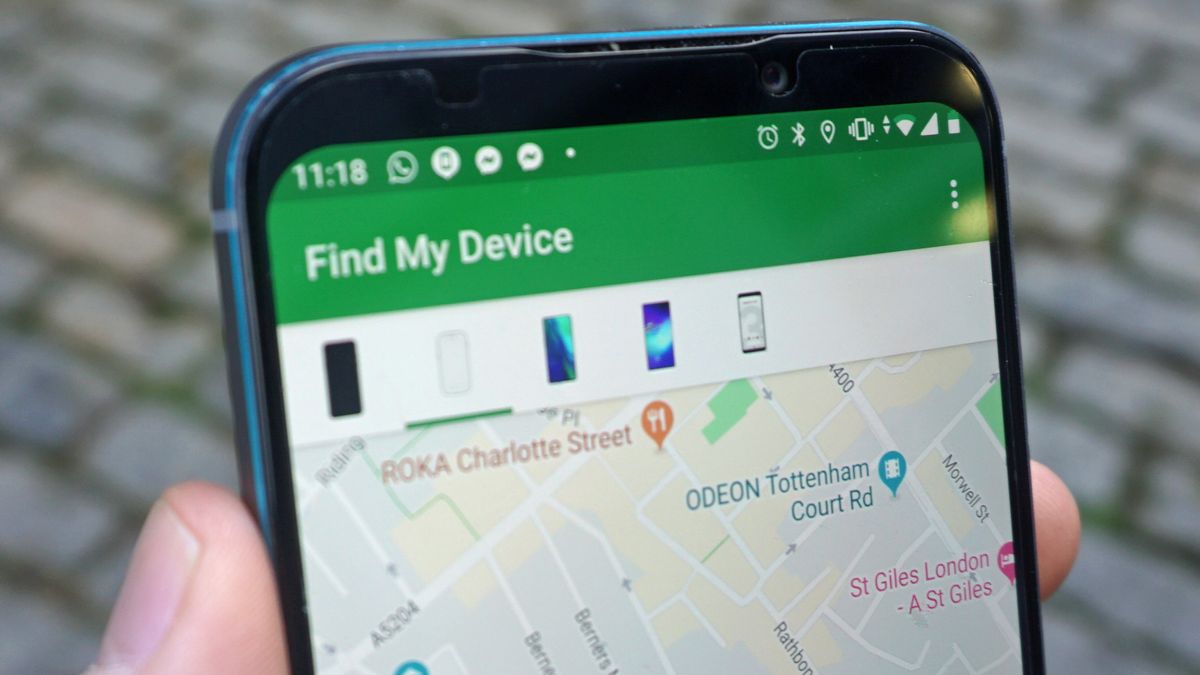
I’ve got a fair few review units I could track… (Image credit: Future)

This sentiment has been echoed by others I’ve spoken to, both tech journalists and not, as not many people consider using, or even know about, Google’s Find My Device. But what happened next is enough reason to reconsider that.

Bringing it home

The next morning, I’d given up hope of reclaiming the stolen phone – I’d ordered a new SIM card, downloaded all my lifestyle apps onto the Black Shark 2 Pro, and had sent messages round on social media announcing my temporary blackout while the new SIM came.

I logged onto Google Find My Device, ready to take the nuclear option and erase all my data on the Xiaomi phone. After all, I had personal data, contactless payment information and probably the best mushroom burger recipe ever saved on the handset – I couldn’t let this all fall into the wrong hands.

[the_ad id=”978″]

I was hesitant though, and instead of selecting ‘Erase Device’ I pressed ‘Secure Device’, which lets you lock the device, but also leave a message and phone number for whoever finds the phone. I knew this was a stretch, but if the phone was static because it had been dumped, perhaps someone else could find it? I left a short message and my mum’s phone number, more to make myself feel good, rather than out of any hope.
Goodnight, sweet prince (Image credit: Future)

Then, a few hours later, I got a message from my mum. It was a confused message, and in hindsight, I probably should have let her know I left her phone number as my lock screen. The message was simply a screenshot, of a text conversation with an unsaved number, informing me that someone had found my phone and was getting in touch to return it.

As I later found out, my robber had seemingly chosen to wear trousers with small pockets that day, because as they sped off with their newfound loot, they put my phone in their pocket – and it had promptly fallen straight back out onto the pavement. My phone’s saviour picked it up and tried to return it, thinking it belonged to the cyclist, but hadn’t been able to catch up. Instead, they had returned it for safekeeping to their place of work – which is where Find My Device had been telling me it was all along.

[the_ad id=”978″]

When I decided to put my mum’s phone number as the contact number, the guardian angel saw it, sent a text off, and the rest is history. 

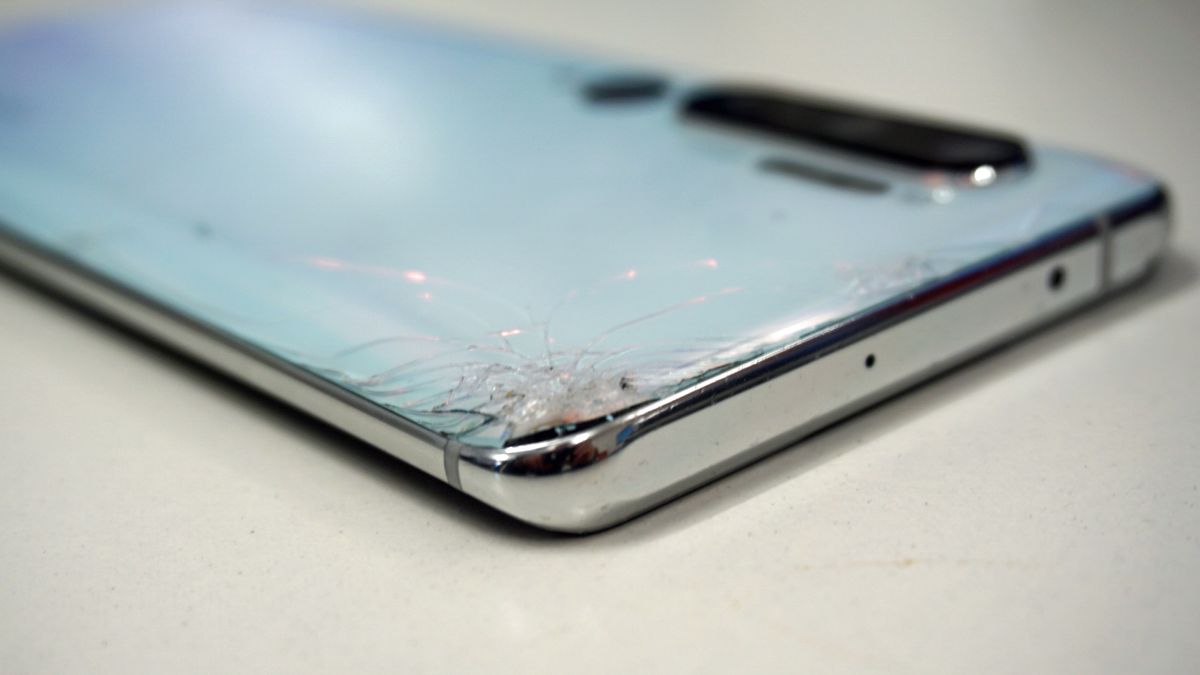
Unfortunately, the drop from the robber’s pocket must have been a hard one, because the screen of the phone was almost unusable, and I was very impressed the person who found it could even see the phone number on it. Still, I managed to retrieve my SIM card, and got to enjoy the bragging rights of someone who retrieved a robbed possession.

The biggest gain, though, was knowledge of how useful Google’s Find My Device app actually is: thanks to its various tools, I could locate my phone, as well as leave a message on it that eventually got it back in my hands.

[the_ad id=”978″]

So if you, like me, have dismissed this app out of hand, for whatever reason, bear in mind it’s still worth giving it a chance if your phone is lost or stolen – you might just be able to reclaim what you thought was lost for good.

What stands in the way of disruptive innovation isn’t the technology but our relentless and irrational grip on the past.

What stands in the way of disruptive innovation isn’t the technology but our relentless and irrational grip on the past.

A friend recently reminded me of Y2K and the dot-com implosion. It’s hard to believe that was just two decades ago. It made me wonder what the next twenty years will look like.

Predicting the future is always suspect but what fascinates me most are predictions about foundational innovations which have already been technologically proven. What stands in their way are the culturalimpediments that block every disruptive innovation.

We adamantly hold onto mental models of what’s familiar. I’ve picked these four because as you read through them your gut reaction will be to reject them by thinking, “Oh, sure I know about that prediction,” my questions to you is, what are you doing about it? If it’s just wait and see then what I can tell you, with little to no uncertainty, is that these four disrupters will create incredible opportunity for new businesses smart enough to latch onto them early.  

Here are four of those long-term foundational 20-year megatrends that will shape nearly every aspect of global society; if we can just let go of the past.

#1 Within 20 years the overwhelming majority of vehicles will drive themselves.

We already have cars and trucks that can drive themselves under certain well-defined circumstances. Last year Delphi, the Boston-based think tank I lead published an extensive report that looked at the advent of electric and autonomous vehicles, AVs. (Get the full report here).

[the_ad id=”978″]

By 2034 the number of automobiles in the U.S. will peak at roughly about 500 million, from about 250 million today. It’s what comes after 2034 that surprises almost everyone who has seen the research; the total number of cars will decline rapidly to less than 50 million by 2050.

That’s because AV’s will drive 20+ hours a day rather than the 2 hour average for owned cars. In fact, cars will likely own themselves through blockchaintechnology. Cities will reclaim 25 percent of the real estate used for parking today. 1,300,000 lives will be saved each year.  Insurance companies will no longer insure human driven automobiles at rates that make it affordable for the vast majority of people.

#2 Within 20 years quantum computers will be as widely used as classical computers.

[the_ad id=”978″]

Quantum computing is progressing at a rate that is surprising even those who are building it. Google engineers recently talked about how they have already reached “quantum supremacy”–the point at which quantum computers can exceed the ability of any classical computer. IBM projects three years at most for that same achievement.

Quantum computers will not replace all classical computers, but they will become an indispensable part of how we use computers and artificial intelligence in our lives. This will be one of the most radical shifts in the history of science, enabling us to take on problems that classical computers are simply unable to deal with. Quantum computers come as close possible to mimicking the biological world, allowing us to simulate everything from cellular organisms, to human biology, to pharmaceuticals, to the inner workings of the universe. 

[the_ad id=”978″]

#3 Within 20 years every human being will have an immutable identity.

Half of the 7.5 billion people on the planet today have no documented identity. They are unable to own property, open bank accounts, or obtain formal credit. They are at the mercy of unscrupulous actors who prey on their economic vulnerability. It may seem outlandish to suggest that this is a technology problem, but in large part it is. Blockchain will enable the disenfranchised to enter the economic mainstream, to transact, and, most importantly, to obtain identities. The basis of all free markets, and democratic systems, is the immutability of ownership. Without identity there is no ownership. Making identity immutable is perhaps the single greatest step we can take towards creating a world where everyone has the opportunity to extract value from their efforts and contributions.

#4 Within 20 Years Autonomous Intelligent Healthcare advocateswill become essential in navigating increasingly more complex personalized healthcare.

The world’s population is aging rapidly. In 1950 there were 10 toddlers for every 65 year old. Today that ratio is 3:1. By 2100 it will be 1:1. That’s globally, not just the U.S. or the developed world.

[the_ad id=”978″]

This will impact every aspect of society but especially healthcare which is also becoming much more personalized in dealing with genomic diagnosis and therapy. The fundamental challenge will be that the coordination of health care, which gets much more complex as we age.

Which is why one of the most significant developments is the evolution of AI-powered health care advocates who can act on our behalf when we are unable to provide the information necessary for the continuity of our healthcare. Imagine that you’re in the emergency room and are unable to communicate your medical history. A health care advocate will have this information available immediately to share with doctors and to coordinate your care seamlessly across providers.

Far fetched? Not from the standpoint of the technology. The challenge will be in rethinking the industrial, social, and economic systems that these innovations will bring about a the pry the past our of our grip. 

Sustainability career options you may not have considered

Sustainability career options you may not have considered

ENVIRONMENT

VIEW SLIDESHOW

In the past 10 to 20 years, careers in sustainability have grown exponentially. This is partly due to increased awareness of climate change. It’s also a result of innovation in the field; for example, the use of wind turbines and solar panels create jobs that didn’t exist before. Looking into the future, more and more jobs will fall into the category of sustainability. Many industries will face stricter resource management, opening the door to an endless number of earth-focused jobs — including some that don’t even exist yet! If you’ve considered a career in sustainability, here are some green jobs you might want to look into.

small wind turbine models and planning papers on a desk

Engineer

There are hundreds of types of engineering degrees and titles, with myriad job opportunities in sustainability. Wind, water and solar engineers study and develop those technologies while product, systems and mechanical engineers can also find ways for business and manufacturing to be more eco-friendly. Engineers focused on urban design can influence the infrastructure of an entire city, and structural engineers can work to design buildings with earth-friendly materials and passive energy systems. Then there are environmental, water, renewable energy and even recycling engineers, too.

Solar, wind or water specialists

Even if you’re not interested in becoming an energy engineer, there are many job opportunities relating to renewable energy. You can install solar panels or wind turbines. If you’re a mechanical type, you can work as a repair technician. Or, you could contribute to research and development for new systems. Another option is to educate others about renewable energy or work in product and system sales.

Related: Former coal miners receive training for renewable energy jobs

plants growing in an organic farm

Organic farmer

As the population of the planet continues to grow, food production is a central focus for many. But artificial, preservative-filled foods are a poor solution for feeding the masses. If you enjoy a hard day’s work and the satisfaction of literally seeing the fruits of your labor, working as an organic farmer might be for you.

Energy broker

As more and more clean systems become available to produce energy, we will continue to need ways to store, transport and use it. As a broker, you can facilitate this process by buying and selling renewable energy for clients.

solar panel, house plans and construction helmet on green grass

Green construction workers

Opportunities for construction planning and work at the residential and commercial levels mean you can take part in helping to build more sustainable structures. Modern construction practices involve the use of energy-conserving HVAC systems, smart home technology, energy-efficient windows, improved insulation, non-toxic paints, water reclamation, solar panels and so much more. Jobs include construction worker, site manager, structural engineer, systems design engineer, architect, HVAC installer, technician or floor covering specialist.

Electric car mechanic

The number of electric cars on the road continues to rise, making a job as an electric car mechanic a promising career choice for the future. In this position, you can perform repairs or even convert gas-guzzling vehicles into electric ones.

teacher listening to students talk with small trees and wind turbine models on a desk

Teacher or public speaker

Education is a powerful tool in the drive to inspire people to change their habits or get involved in a cause. As a teacher or public speaker, you can inform attendees in classrooms, offices and conference centers about important topics like climate change. This will allow you to educate the public about the needs of the environment and steps they can take as individuals or businesses to lower their ecological footprints.

Writer

There has always been power in words, but if public speaking isn’t your thing, perhaps you can express the same information through the written word instead. For example, you can work as a journalist researching companies who pollute or, on the other end of the spectrum, go out of their way to support environmental causes. There are also opportunities to create content on social media, formulating social media campaigns that create awareness about environmental topics.

people gathered around a computer talking

Consultant

Depending on your background, you might not need to obtain additional education in order to work in an industry related to sustainability. As a consultant, you can use your existing knowledge to advise businesses. For example, if you have experience as a contractor, architect or engineer, you can help businesses identify eco-friendly materials or systems during construction or a remodel.

Green jobs will continue to evolve and offer new challenges, but one thing is for certain — they are here to stay.

Images via Shutterstock

Blog at WordPress.com.

Up ↑

Design a site like this with WordPress.com
Get started